TEL:

CULTURE
Impression of Russia, 8-Day Tour of Twin Cities
2018-09-03
The midsummer of August is the best season for tourism in Russia. In order to enhance the team spirit of Bonin and enrich the spare time life of employees, Bonin Group adheres to the tradition of traveling abroad every two years, and organized some lawyers and 25 family members of the firm to go on a sightseeing trip to Russia. See for yourself the beautiful and unique scenery of Moscow and St. Petersburg. Moscow and St. Petersburg are the two most famous cities in Russia. The tour guide compares them to Beijing and Shanghai in Russia. I think this analogy is more to help Chinese understand the temperament of the two cities.
Anyway, I have great expectations for this trip. As a post-80s generation, we will still be nurtured and influenced by Russian culture and art in the process of growing up: from the novels of writers such as Leo Tolstoy, Chekhov, Gorky and Ostrovsky to Pushkin’s poetry ; From films such as "Lenin in October" and "The Conquest of Berlin" to the ballet "Swan Lake". For us, St. Petersburg (called Leningrad in the past), Moscow and Red Square, the Kremlin, and the East Palace have long been our favorite places.
According to the travel agency's itinerary requirements, we arrived at Ningbo Lishe Airport early at 5:00 in the morning on the 8th, went through security check, and boarded the plane. Since then, we have officially started our Russian impression tour.
A glimpse of Moscow, recalling the red Soviet-Russian culture
After a transfer and a long flight time of 9 hours, we arrived at Moscow International Airport at 15:00 local time. After a riot, we boarded a bus and set off for downtown Moscow. Taking advantage of the time to go to the city, the tour guide introduced us to the historical background of the country on some small attractions along the way. The red Soviet-Russian culture has influenced generations of Chinese people, so when you look at the history of the Soviet Union, you will find that the country's huge territory has nurtured a complex culture, as well as a mixed history. Vehicles pass through the streets of Moscow, and you can easily find those familiar things, although they may have been lying in books or slogans before, which shows that the influence of Soviet Russian culture on us is very far-reaching, and the scenery passing by in front of us is like a huge The vortex sucks you into it, and then you have to be filled with emotion.
First stop: Sergeyev Trinity Monastery
The Sergey Monastery is the first stop of the Russian trip. It is located in the small town of Sergeyev. From a distance, above a dense forest, the golden spires and domes of the church flash past from time to time. Built in 1337, this courtyard is one of the oldest monasteries of the Russian Orthodox Church and the spiritual center of the Russian Orthodox Church. Facing the monastery, there are stone walls up to 5 meters on both sides of the big arch. Above the gate is a green dome, and on the dome is a golden dome. I saw a group of pigeons flying around in the sky. The frescoes on both sides of the second arch tell the story of the life of Saint Sergei Radoniezhsky. Going inside, you will be greeted by a beautiful architectural community that integrates various forms of churches and annexes. There is the beautiful Cathedral of the Assumption of the Virgin Mary, which was ordered by Ivan IV in 1585. It has a central purple-gold dome and onion-shaped blue domes around it; the most famous "Three Holy Ones" "The church is the core of the monastery. It was built in 1423-1442. The outer wall is made of white stone, which is a model of early white stone architecture in Russia. There is also a five-story bell tower with a height of 88 meters and 42 wall clocks. It is the whole building of the monastery. the most precious part of it. The whole monastery is full of solemnity and holiness. People who come to the monastery seem to have received a baptism of God, and people can't help feeling that this is the power of faith.
Second stop: Red Square, Kremlin
Red Square is the witness of Russian history and the symbol of Moscow and even Russia, just like Tiananmen Square is the symbol of Beijing and even China. The Red Square is about 700 meters long and 300 meters wide, and its area is only one-fifth of Tiananmen Square. Its ground is unique. It is entirely paved with vertical stones. The entire road is undulating, and the surface has been polished to be smooth and uneven. It makes people think of how difficult it is for the honor guards of the three armed forces to walk neatly on such a road. Walking on the Red Square, there are many famous buildings around. To the north, the red brick building built in the 19th century of the State History Museum has a very Russian style; to the south, the colorful onion-shaped dome of St. Basil's Cathedral is a classic of Russian architectural art; to the east, the pole of the Gum State Department Store The beige building with European classical style shows its unique style and charm; to the west, the tall red walls of the Kremlin and the towering golden domes and spires of the towers represent the current center of power in the Tsarist Empire, the former Soviet Union and Russia.
The Kremlin is a medieval castle. As a political center, it has witnessed countless conspiracies over the centuries. Anyone who knows Russian history knows that the era of Ivan IV is like a horror show. Russia was the first nation in Europe to establish a police state. Ivan the Terrible used his genius to create a perfect suppression machine. Later, his genius was surpassed by Stalin again. This is another "Ivan the Terrible". His secret police purged the Soviet leadership every few years, and the KGB would write it on the secret arrest warrant if anyone disliked the eye. Whose name, this person will evaporate from the world. The Kremlin was built by Italian designers, but inherited Russian wooden architecture. There are four churches and a treasure hall in the part that can be visited in the palace. These churches can be traced back to the 16th century. It is worth mentioning that the icon painting in the Cathedral of Our Lady is the most outstanding painter in medieval Russia, Derek Rublyo. Husband's works, his works are "uncompromised" national quintessence. Communicating with another world through icons is a faithful expression of the spiritual life of medieval Russians. Now more than 70% of Russians believe in the Orthodox Church, which fills the belief vacuum after the disillusionment of ideals.
The third stop: New Virgin Cemetery
Death has always been a taboo subject, and in any case, people always hope to leave peace to those who leave. But in Russia, perhaps death does not mean leaving. If you want to understand this country, perhaps the people who leave will give us the answer. There is such a cemetery in Moscow, the capital, the Novodevichy Cemetery. It is one of the three largest cemeteries in Europe. It covers an area of 7.5 hectares. There are many statues in the cemetery. , sleeps the soul of Russia. There are only those who have made contributions to the country and are recognized by the people who sleep here. No matter how much money or high status there is, if the people don't approve of it, they won't have a place here. For more than 200 years, modern Russian social and cultural elites have gathered here: writers Pushkin, Gogol, Chekhov; singer Shariabin; dancer Ulanova; "MiG" aircraft designer Mikoyan; diplomat Gromyko; national hero Zoya; politicians Khrushchev, Yeltsin; ... more than 20,000 famous people in Russian history are buried in this cemetery.
Here, the most interesting thing is to search for tombs, to find where the big people that you are interested in lie. However, there are too many tombstones here, and more than 26,000 people are buried. Where to find it? If there is no guide, it will be very painful to find it by yourself. The design of tombstones in cemeteries is not a thousand people. Most of the tombstones are designed according to the professional identity of the tomb owner, representing the memory of later generations. Yeltsin's cemetery occupies a large area and is eye-catching. It is shaped like a Russian tricolor flag. He lived as the founder of the new Russia. The cemetery of Khrushchev is a must-see for tourists. The general secretary who was ousted by the coup was only mentioned in a Moscow tabloid when he died. The sculpture on his cemetery was designed by the sculptor Neiz Westerne, who was scolded by him back then. The tombstone is black and white, half black and half white. There is a window on it, and the tomb owner's round head is stuck in it. , symbolizing the merits and demerits of his reign, leaving it for future generations to comment, and he was there to listen. Ulanova's tombstone is her image in the ballet "Swan Lake", and Russians will always remember this beautiful white swan. Ostrovsky, the author of How Steel Was Tempered, has his tombstone depicting his work during his lifetime, and his beloved military cap and saber under the tombstone. And so on, and many famous people who have played a role in the development of Russian history are buried here.
The ingenious combination of the soul of the tomb owner and the art of the tombstone has formed a unique Russian cemetery culture. It's a pity that the time for the visit was too short, and the tour guide's introduction was too good to be recorded.
Fourth stop: Karominsk Manor
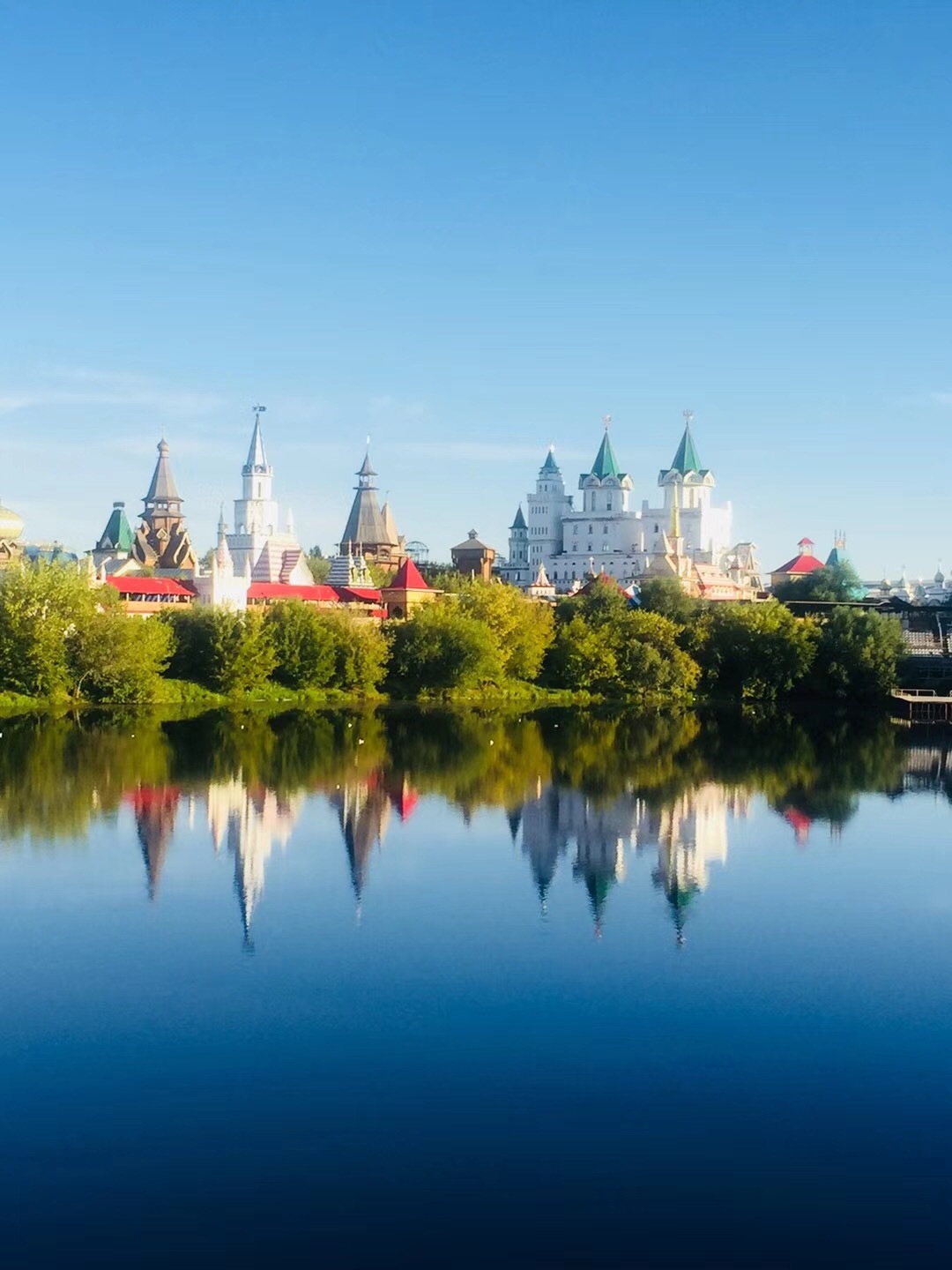
This royal manor is also the last important stop in Moscow. It is located on a high slope on the right bank of the Moskva River in the suburbs of Moscow. It covers a very large area. The manor still retains some old buildings where the tsar lived, including the Jesus Christ built in 1532. The Cathedral of Ascension includes the Dome Cathedral of Schneider Johann built in 1555-1561, the bell tower of St. George in the 16th century, the red door in 1672, and the remaining gate tower of the wooden palace in the 17th century. Among the green trees, there is also a small wooden house where Peter the Great lived, with a bronze statue of him in front of the house. This manor with a long history, well-preserved ancient buildings and beautiful natural environment has become one of my favorite parks.
Venice of the North, the splendor of St. Petersburg
If Moscow is the official capital of Russia, then St. Petersburg is the real heart of Russia. It is "the cradle of Russian poetry" and "the capital of Russian literature". It is the proudest part of Russian culture and art, and the most brilliant poems are staged here. This is the city where Pushkin, Gogol, Dostoevsky, Gorky, Tchaikovsky, Repin and others lived and lived. Their imprints are deeply engraved on this city and make this city It shines brightly in the cultural history of Russia and even in the cultural history of the century.
St. Petersburg is an estuary to the Baltic Sea obtained by Russia after the war with Sweden. The city was founded in 1703 and has a history of more than 300 years, but its construction and development history is the history of the rise of the Russian Empire. The two "great emperors" in Russian history, Peter I and Catherine II, ushered in the golden age of the Russian Empire that spanned the Eurasian continent. As the capital and cultural center for 300 years, St. Petersburg has retained a large number of royal relics and historical buildings. Of course, most of the buildings in the entire city were built by French and Italian designers. It can also be seen from these buildings that Russia at that time was very influenced by the West. deep.
First stop: East Palace Museum
The East Palace is located on the Palace Square in St. Petersburg. It was the first palace of the tsar. It used to be the private museum of Catherine II and is now part of the National Hermitage Museum. Together with the Louvre in Paris, the British Museum in London, and the Metropolitan Museum of Art in New York, it is known as the world's four largest museums. The East Palace itself is a huge work of art. It is the largest and most distinctive Baroque building in St. Petersburg. It is surrounded by two rows of colonnades and is majestic. There are a lot of decorative frames and relief decorations around the window. The walls are made of white, Green and green. The East Palace has three floors and more than 1,000 halls, of which more than 360 have been opened into permanent exhibition halls of the Hermitage Museum. The total length of the exhibition line is 30 kilometers, which is known as the longest art gallery in the world. But these more than 360 exhibition halls only display 5% of the total collection of more than 2.7 million treasures of the Hermitage.
The first floor of the museum is mainly Egyptian cultural relics and ancient cultural relics, the second floor is the essence of the whole museum, the main exhibition halls and works of art are on the second floor, and the third floor has some Zhan-Bytium, Islamic, Japanese and Chinese cultural relics. The large staircase leading to the second floor is commonly known as the "Jordan Staircase". From the ground to the steps, railings, handrails and square columns, all of them are made of marble. The windows, columns and lamps are all decorated with golden floral decorations. It is truly magnificent and exquisite. abnormal. Several treasures of the East Palace are also gathered on the second floor. The first is the "Golden Peacock Clock" on display in the Garden Hall, which is a set of extremely complex mechanical devices. A lifelike golden peacock stands on a leafy tree, and there are one on the left and one on the left. The golden rooster and a golden owl locked in a cage, and the peacocks are surrounded by peony flowers, etc. The golden arrangement symbolizes prosperity and good luck. When the mechanical system is activated, the golden peacock will open its screen and the golden rooster will croak, which can be described as a combination of decoration and entertainment. In addition, several treasures of the town palace are in the Da Vinci Hall. We know that Western European painting is the essence of the Hermitage collection. It is said that the oil paintings collected here span 700 years from the 14th century to the 20th century, which can constitute a complete history of Western painting, including Rembrandt, Works by Rubens, Picasso, Raphael and others. There are only ten surviving works of Leonardo da Vinci, and Hermitage owns two such as "The Virgin of Benoa", as well as Raphael's masterpieces "The Holy Family", "The Virgin of Cornesta Pillet" and Rembrandt's "The Prodigal Son". Art works other than paintings are also very impressive, and Michelangelo's sculpture "Little Boy Curled in a Ball" is also in the collection here. The entire East Palace Museum has become the representative works of the three masters of Renaissance art.
Due to the very limited visit time, the whole visit process was like watching the flowers on a whim, and many exhibition halls passed by in a hurry. Hey, no matter how much time is enough to visit a museum like the East Palace, it's a pity.
Second stop: Summer Palace Garden
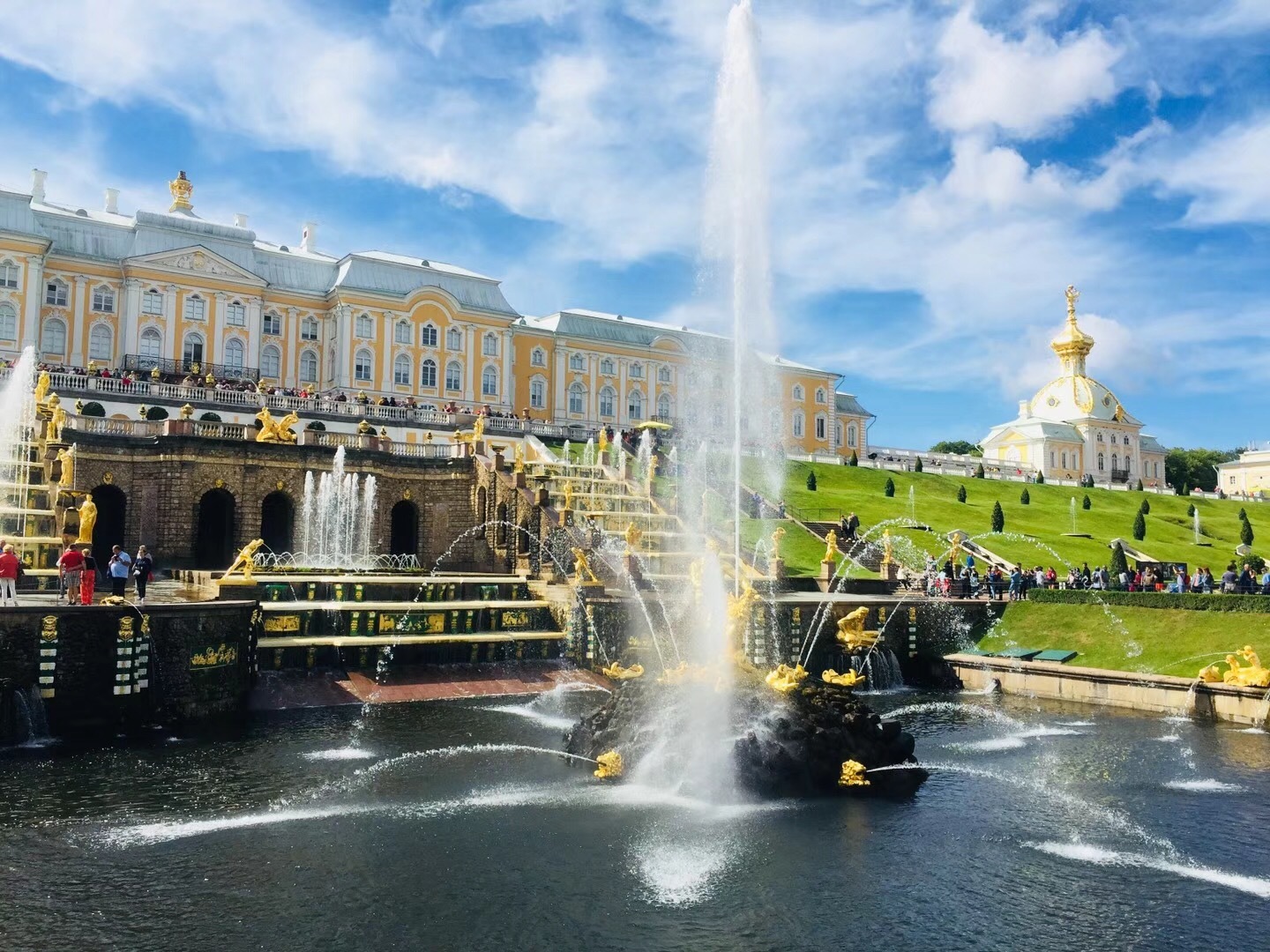
Peterhof is one of the most representative "three palaces" to visit in St. Petersburg. It was a palace built by Peter the Great in the early 18th century. The Summer Palace includes a complex of palace gardens from the 18th and 19th centuries, and is known as the "Russian Versailles" due to its grandeur and grandeur.
According to the tour guide, the Summer Palace Garden is divided into the upper garden and the lower garden. The main essence is in the lower garden. It is hard to get lost. We went down along the large ladder-shaped waterfall escalator on the central axis of the lower garden. The water rushes to the large semicircular pool below. In the center of the pool stands a statue of Samson the Hercules fighting the sea monster. Next to the waterfall and the pool, there are 37 golden statues of various shapes, 29 submerged reliefs, and 150 small statues. , there are 64 fountains, the spring water spews up to the sky between the golden statues, and the splashing water droplets are crystal clear against the blue sky and white clouds. Along the central axis of the canal, through a dense forest, you can walk to the seaside and look out over the Gulf of Finland. Although the time was tight, while I kept pressing the shutter to take pictures of the magnificent scenery in front of me, I still did not forget to take two more breaths of fresh air to live up to this famous natural "oxygen bar".
Third stop: Ekaterina Garden + Palace
Catherine Palace is located in Pushkin City on the outskirts of St. Petersburg. It was built in the 18th century. It was originally built by Peter the Great for his wife Catherine I, and Queen Elizabeth and Catherine II carried out large-scale works on it. expansion. Ye Gong was inscribed on the UNESCO World Heritage List in 1990 due to its extreme baroque and rococo style, exquisite and extravagant pattern, fresh and soft colors, and permeating the feminine and charming charm.
The visit to Ye Palace is divided into two parts: the palace and the garden. The most famous of the palaces is the Amber Room, known as the Eight Wonders of the World. The Baltic Sea is rich in amber, accounting for almost 80 to 90% of the world. Amber is almost deified because of its unique ornamental and medicinal value. In 1717, King William I of Prussia gave a batch of rare amber bricks as a gift to Peter the Great, who used it as a decorative material to build the Amber Room, which is famous for its unique materials and magical effects. During World War II, the Amber Room was split into 27 boxes by the German army and transported away, and then mysteriously disappeared. After the end of World War II, the Soviet Union rebuilt the Amber Room and basically restored its original appearance. It is called the "Holy Land of Russian Honor" and is worth a visit. The entire Ye Palace was occupied by German troops during World War II, and most of the rooms were destroyed. After the war, a lot of manpower and material resources were spent on repairs. There is a photo wall in the corridor on the first floor to show the process. So far, Ye Palace has only opened a part of the house. of the rooms, still more than half of the rooms are not open.
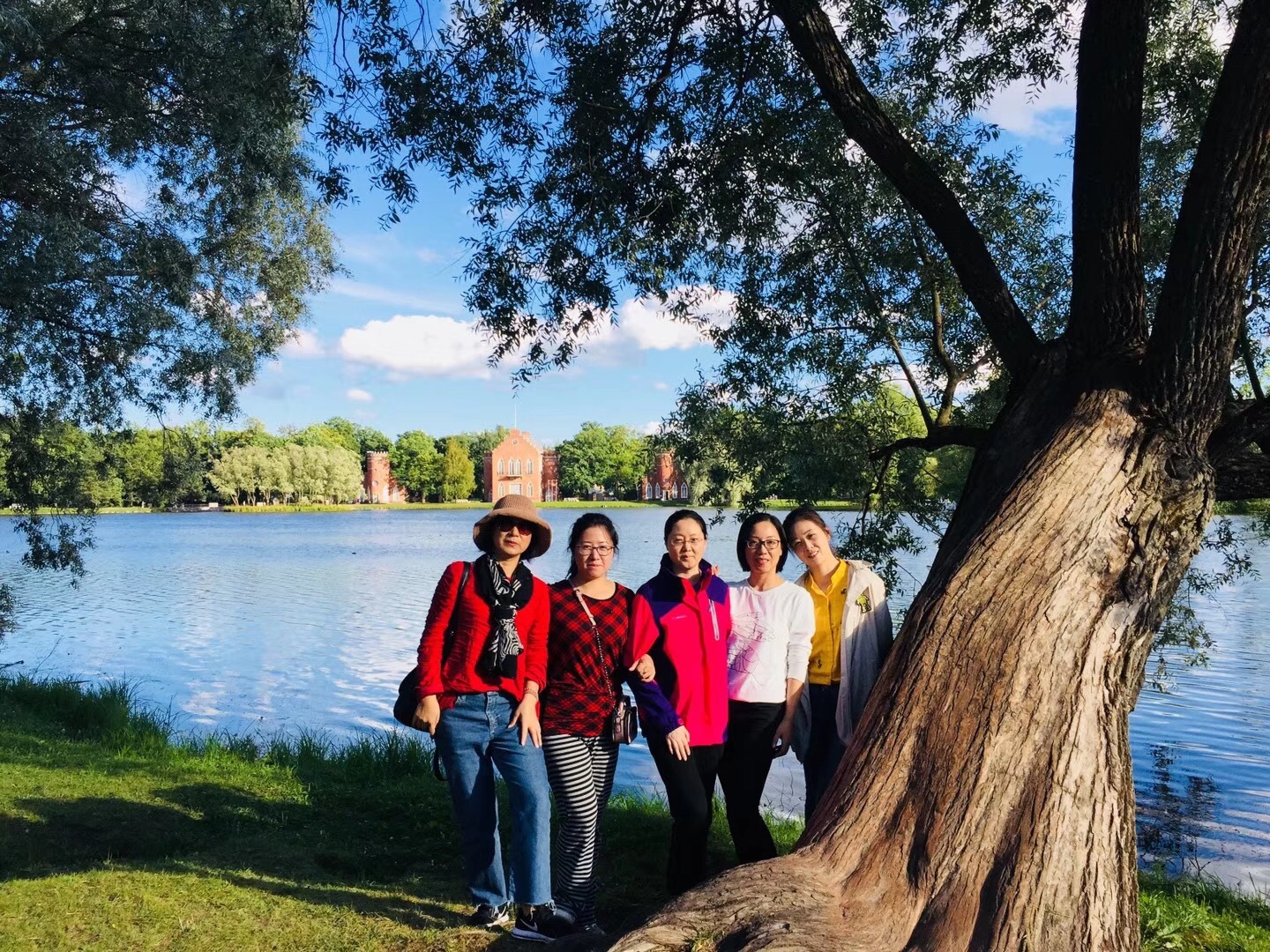
The garden of Ye Palace has two styles, one is the French garden on the right side of the palace, which presents a classic symmetrical geometric layout; the other is the English garden with natural layout on the left side of the palace, with the lake in front of it, surrounded by the whole lake. It is a dense green forest, and a white stone pavilion is slightly exposed by the lake. Walking up the corridor spiral staircase, you can enjoy the panoramic view of the garden and the sky garden on the second floor, which is refreshing.
Fourth stop: Kazan Cathedral, Cathedral of Spilled Blood
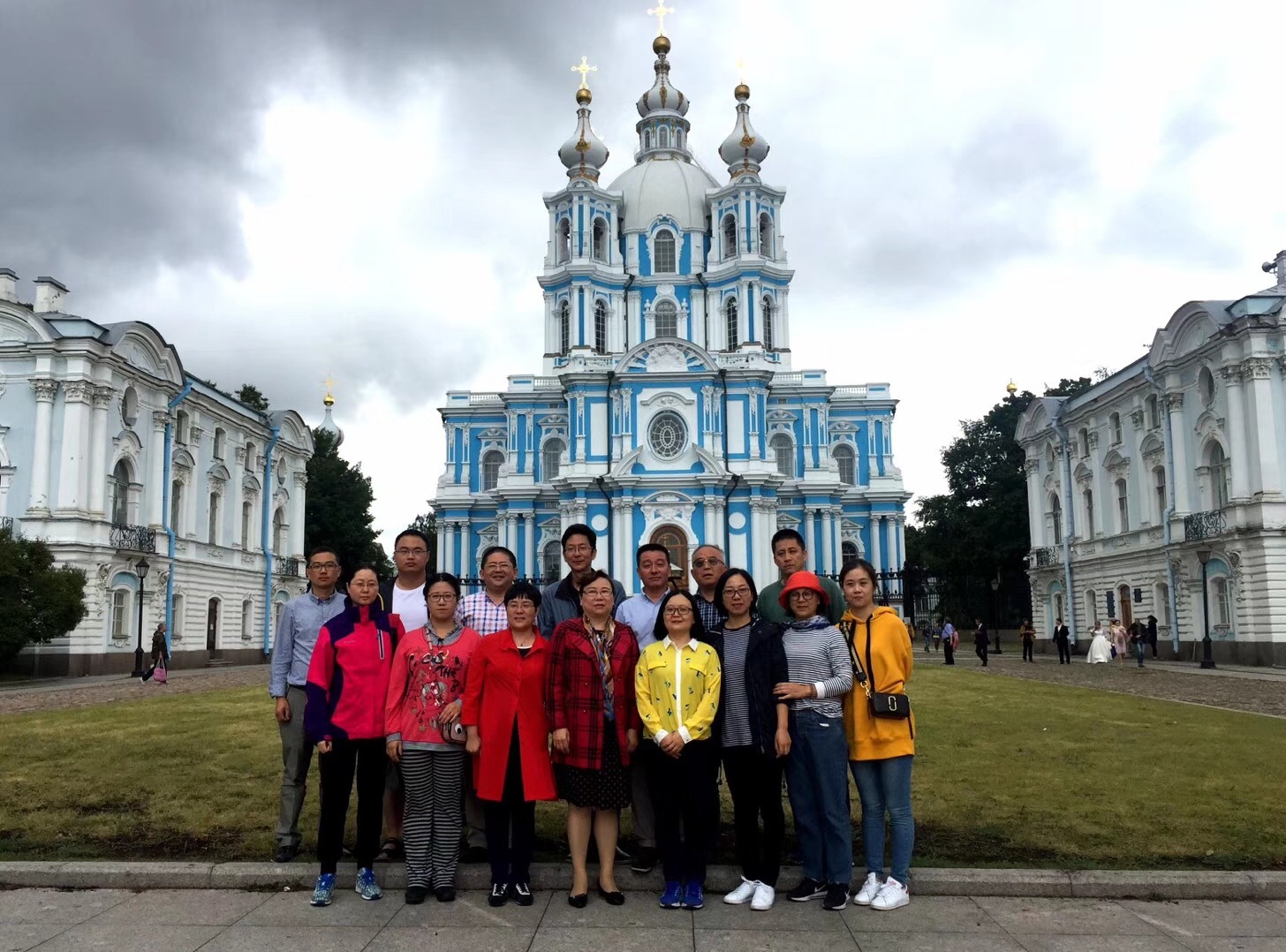
The Kazan Cathedral across Nevsky Prospekt was the first attraction we visited in St. Petersburg, which was built to commemorate Russia's victory over the French army of Napoleon. Seeing the church from a distance, its appearance has the European Baroque style. The most notable feature is that its two sides are extended by 94 classicist colonnades that need to be embraced by several people to form a semicircular square, above the middle sanctuary. It is a church dome as high as 70 meters. There is a granite fountain on the square in front of the church. On both sides are the memorial statues of the Russian commander Kutuzov and Barclay de Tolly. The appearance of the whole church is magnificent and magnificent.
The Cathedral of Spilled Blood was our last sightseeing spot in St. Petersburg and Russia, and it was the building that left the deepest impression on me. The official name of the Cathedral on Spilled Blood is "Cathedral of the Resurrection of Christ". Alexander II is known in Russian history as "the serf liberator" and brought many contributions to Russia during his 26-year reign. It is said that in the construction of the church, the place where Alexander was assassinated was preserved, and the bloodied railings and a bloody bridge deck can still be seen today. It's a pity that we didn't arrange to visit inside, we were not able to witness the remains of this historical tragedy. But the appearance of this church is no less impressive, it differs from the European classicism of other major churches in St. Petersburg, returning to the typical 17th-century Russian style. The church is 81 meters high, and the bottom is a three-story building similar to a cuboid. There is no distinction between the back and the front, and each side can be used as a front. There are colorful image patterns on the main body, and colorful tiles, enamels, and bronze plates are decorated with rich patterns. Above the main body is the traditional onion-headed spire supported by arches. The decorative style of the spire is also rich and varied. There are blue bases with white and green spiral shapes, white, green, orange and blue cones decorated with four-color cones, and golden ones. Gilt covered. The top design at the entrance of the church, and all the doors and windows on the outer wall are surrounded by carvings, and the roof uses a lot of mosaic tiles, and the biblical stories are described through mosaic murals of different sizes. The overall structure of the church is complex, the decoration is gorgeous, and it is wonderful.
The Russian impression tour came to an end. Although the trip was short, the harvest was great. The bright sunshine, blue sky, white clouds of Moscow and St. Petersburg, the majestic and colorful churches, palaces and gardens, the treasures in the East Palace and Ye Palace. The culture and art of Russia shows the beauty, elegance and tranquility of Russia to the world at a glance.

Relevant Culture
Name:
Zhangsan
2022-05-20
Boning, has the first batch qualification of bankruptcy administrator approved by the senior
Thanks for your attention
Name:
Test
2022-05-20
ZHEJIANG BONIG LAW FIRM
Hello
Contact Us
ADD.:4/F, C15 Building, research and Development Park, No. 299 Lane 37th, Guanghua Rd. Hi-Tech Zone Ningbo.
TEL:0574-27836000 , 27836008
Complaint TEL:0574-27836008 , 27836019
FAX:0574-27836060
E-mail:boning@nbbnlaw.com
Website:http://www.nbbnlaw.com




Copyright © 2022 ZHEJIANG BONIG LAW FIRM All rights reserved. 浙ICP备18042762号-1 Powered by www.300.cn SEO